Unlocking your dog’s full potential in training often comes down to understanding what truly motivates them. The Premack Principle offers a powerful, yet surprisingly simple, framework to leverage your dog’s natural desires for more effective and enjoyable training sessions. It’s all about making their favorite activities work for you!
Understanding the Premack Principle
Definition and Origin
The Premack Principle, often called ‘Grandma’s Rule’ or ‘first you eat your vegetables, then you can have dessert,’ was developed by psychologist David Premack in the 1960s — it’s closely related to the broader science covered in our guide to operant conditioning in dog training. At its core, this principle states that a more preferred activity can be used to reinforce a less preferred activity. In the context of dog training, it means using something your dog wants to do as a reward for a behavior you want them to perform. It’s a fundamental concept for any dog trainer looking to effectively use life rewards — see our dog training guide for how this fits alongside other proven reinforcement methods.
How it Works in Behavior Modification
Applying the Premack Principle to dog training involves identifying a high-probability behavior (something your dog loves to do) and using it as a reinforcer for a low-probability behavior (something they are less inclined to do). This clever approach makes the dog more likely to perform the desired action. For instance, consider the following example:
| Behavior Type | Example |
| High-Probability Behavior | Sniffing during walks |
| Low-Probability Behavior | Walking nicely on the leash for a short period can be reinforced with a high-value reward, making the training more effective. |
Importance of Reinforcement in Dog Training
Reinforcement is the cornerstone of all successful dog training methods, and the Premack Principle offers a fantastic way to utilize it. By understanding what your dog truly wants, you can tailor your reinforcement to be incredibly effective. Whether your canine companion loves to chase a squirrel, play tug, or simply get a belly rub, these “life rewards” can be strategically employed to train your dog. If your dog doesn’t respond to traditional treats, applying the Premack Principle in dog training can be a game-changer, making the dog’s training more enjoyable and productive for everyone involved.
Applying the Premack Principle to Dog Training
Identifying High-Probability Behaviors
To effectively apply the Premack Principle in dog training, the first crucial step is to accurately identify those high-probability behaviors your canine companion absolutely loves to do. Think about what your dog chooses to do when given the chance – does your dog love to chase squirrels, sniff every lamppost, or perhaps play an enthusiastic game of tug, which can be a high-value activity under Premack’s Principle? These are the activities that can become powerful life rewards, and recognizing them is key to successful positive reinforcement and shaping the desired behavior you want to see.
Matching Reinforcement with Desired Behaviors
Once you’ve identified your dog’s favorite activities, the next step is to strategically match these high-value reinforcers with the less preferred, low-probability behaviors you want to reinforce, ensuring the dog values the training process. This way, the dog is more likely to perform the desired action because they know a highly preferred behavior is just around the corner, making the Premack Principle incredibly effective for dog training.
| Less Preferred Behavior | High-Value Reinforcer is crucial for making the training more effective, especially when paired with low-probability behaviors. |
| Coming when called | Sniffing around the park |
Steps to Implement the Premack Principle
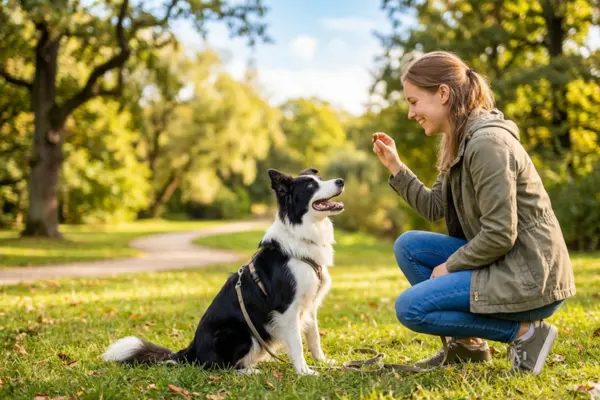
Implementing the Premack Principle to train your dog involves a simple sequence: first, clearly state the low-probability behavior you want your dog to perform (e.g., “sit”). As soon as your dog successfully completes the task, immediately follow it with the high-probability activity they love (e.g., a quick game of tug or a short sniff on the leash). Consistency is key; by consistently pairing the less preferred behavior with a highly preferred one, your dog will quickly understand the contingency, making their training sessions much more productive and enjoyable, even for those behaviors your dog doesn’t respond to initially.
Practical Examples of the Premack Principle in Dog Training
Using Playtime as a Reward
Playtime is an incredibly powerful life reward that can be harnessed through Premack’s Principle in dog training, encouraging the dog to sit or go when commanded. Many dogs love to play fetch, chase a ball, or engage in a vigorous game of tug. You can use these fun activities to reinforce a less probable behavior, helping the dog learn what is expected. For example, if you want your dog to perform a perfect “stay,” ask for the stay, and once they hold it for the desired duration, immediately release them with their favorite toy. This makes the dog’s training much more engaging and motivates them to perform the low-probability behaviors you want, ultimately helping the dog learn.
Food Rewards and Their Effectiveness
While the Premack Principle often emphasizes “life rewards,” food can also be incorporated effectively, especially for dogs highly motivated by treats. However, instead of just giving a treat, you can use the act of eating something highly delicious as a reinforcer for a low-probability behavior. For instance, if your dog needs to practice walking nicely on the leash without pulling, you could reward short bursts of loose-leash walking with access to a special, high-value chew that they get to enjoy only after performing the desired behavior. This strategic use makes the food even more valuable to the dog.
Combining Commands with Fun Activities
To truly apply the Premack Principle to dog training, consider integrating commands directly with your dog’s favorite activities. This teaches your dog that performing the desired behavior grants access to the activities your dog loves.
| Dog’s Favorite Activity | Prerequisite Command(s) |
| Racing out the door for a walk | “Sit” and “Stay” at the door |
| Chasing a squirrel / Running and sniffing | “Coming when called” |
Common Challenges and Solutions
When the Premack Principle Doesn’t Work
While the Premack Principle is a powerful tool in dog training, there might be times when it seems your canine companion isn’t responding as expected. This usually happens if the “high-probability” behavior isn’t truly high-value for your dog at that specific moment, or if the “low-probability” behavior, like the dog to sit, is too difficult. It’s crucial to ensure that the reward you’re offering through the Premack Principle is something your dog truly wants and that the desired behavior is achievable. If your dog doesn’t respond, it’s a signal to reassess your choices of reinforcer and the complexity of the task.
Adjusting Strategies Based on Dog’s Learning
Effective dog training with the Premack Principle requires ongoing observation and flexibility. Every dog is unique, and what motivates one may not motivate another. If you find your dog is struggling or their motivation wanes, it’s time to adjust your strategies. Perhaps the reinforcement isn’t strong enough, or the duration of the less probable behavior is too long. Continuously monitor your dog’s behavior and adjust the difficulty of the task or the value of the life rewards. This adaptive approach ensures that the Premack Principle remains an effective tool to reinforce the behavior you want.
Maintaining Consistency in Training
Consistency is the backbone of all successful dog training, especially when applying the Premack Principle. For your dog to truly understand the contingency – that performing a less probable behavior leads to a highly preferred one – the sequence must be consistent every time. Ensure all family members or anyone involved in training the canine companion are on the same page about which behaviors are being reinforced and with what life rewards, ensuring the dog learns effectively. Inconsistent application can confuse your dog and slow down the learning process, making it harder to train your dog effectively using this principle.
Conclusion: Effectively Using the Premack Principle
Recap of Key Points
The Premack Principle, often called “Grandma’s Rule,” is an incredibly effective dog training method that leverages a more preferred activity to reinforce a less preferred one. By identifying what your dog truly wants – whether it’s to chase a squirrel, sniff around, or play tug – you can use these high-probability activities as powerful life rewards to help the dog learn more effectively. This principle, developed by psychologist David Premack, teaches your dog that performing a desired behavior grants access to something they love, making the dog’s training sessions more enjoyable and successful, even if your dog doesn’t respond to traditional treats.
Encouragement to Experiment with Techniques
Don’t be afraid to experiment when you apply the Premack Principle to dog training. Every canine companion is an individual, and discovering what truly motivates your dog can be a fun and rewarding journey. Try different life rewards, vary the difficulty of the low-probability behaviors, and observe your dog’s responses closely. This hands-on approach will help you fine-tune your dog training methods and discover the most effective ways to reinforce the behaviors you want to see. The more you experiment, the better you’ll become at using the Premack Principle to train dogs.
Final Thoughts on Dog Training Success
Ultimately, successful dog training with the Premack Principle is about building a strong, positive relationship with your canine companion based on clear communication and mutual understanding. By consistently using what your dog loves to reinforce desired behaviors, you not only achieve your training goals but also deepen your bond. Remember that the journey of training your dog should be fun and rewarding for both of you. Embrace the Premack Principle, and you’ll find a powerful way to make dog training an incredibly positive experience, helping your dog become a well-behaved and happy member of your family.
FAQ’s
Q: How can I use the Premack Principle to train dogs so my dog learns faster?
A: The Premack Principle is a powerful technique: let a high probability activity (what your dog already loves, like throw the ball or tug toy) be a reward for a low probability or less desirable activity (like sit, paw, or loose leash walking). Make the fun activity contingent upon the dog performing the task — for example, your dog sits and waits, then you throw the ball. This reward-based, approach to dog training by using preferred activities reinforces the less probable behavior and helps your dog learn reliable cues.
Q: What counts as high probability vs low probability when I train dogs?
A: High probability behaviors are activities your dog is likely to occur often — eating dessert-like treats, playing tug, or chasing a ball. Low probability behaviors are less desirable or low frequency actions like sit-stay, paw on cue, or loose leash walking. The premise: let the high probability activity follow the low probability one so the dog will learn that the less desirable activity gets access to the fun.
Q: Can the Premack Principle help with loose leash walking and other common problems?
A: Yes. For example, you can make moving forward on a loose leash contingent upon your dog walking nicely for a few steps; when the dog walks well, you let them go sniff or throw the ball. This reinforces the less probable good walking behavior and is a practical, reward-based way to shape better habits without force.
Q: Do I need food treats to use the Premack Principle, or can I use things like tug or play?
A: You don’t have to rely on food treats — activities as rewards work great, too. If your dog already loves tug or playing fetch, those high probability activities can act like a dessert. The key is making access to that high probability activity contingent upon completing the target behavior, whether it’s a sit, paw, or coming when called.
Q: How do I apply Premack with a “dog to go” cue or recall so my dog learns reliable recall?
A: Teach a “dog to go” or recall cue by making the reward predictable: ask for the recall, then immediately give access to a valued activity (food treats, throw the ball, tug toy). Start short and reinforce consistently so your dog associates coming with something powerful. Over time your dog will learn that the cue is likely to occur and worth obeying.
Q: Isn’t Premack Principle just bribes? What do certified dog trainer pros say?
A: It’s not bribery — it’s reinforcement science. Many certified trainers, including professionals recognised by the Association of Professional Dog Trainers (APDT), use similar reward-based strategies as standard, ethical practice. Premack principle is often framed as “first do the less desirable, then the fun” which reinforces the less desirable behavior so it becomes more likely to occur. It’s ethical, effective, and less aversive than punishment.
Q: My dog ignores me for toys and food treats — how do I reinforce less probable behaviors when the high probability option overwhelms the command?
A: Start by lowering the value of the high probability activity until your dog will do the low probability behavior for it. For example, make the toy less exciting in the beginning (don’t wave it), or use small food treats. Gradually increase the value as your dog learns the cue. Always make access contingent upon the correct response so it reinforces the less probable behavior.
Q: Any quick examples of using Premack for tricks like “paw” or “sits and waits”?
A: Sure. If you want a paw, ask for a sit first (a low probability task) and then ask for paw. After the dog gives paw, immediately reward with a quick game (throw the ball) or food treats. For sits and waits, require a brief wait and then let them perform a high probability activity. The repetition makes the sit/wait more likely to occur next time.