
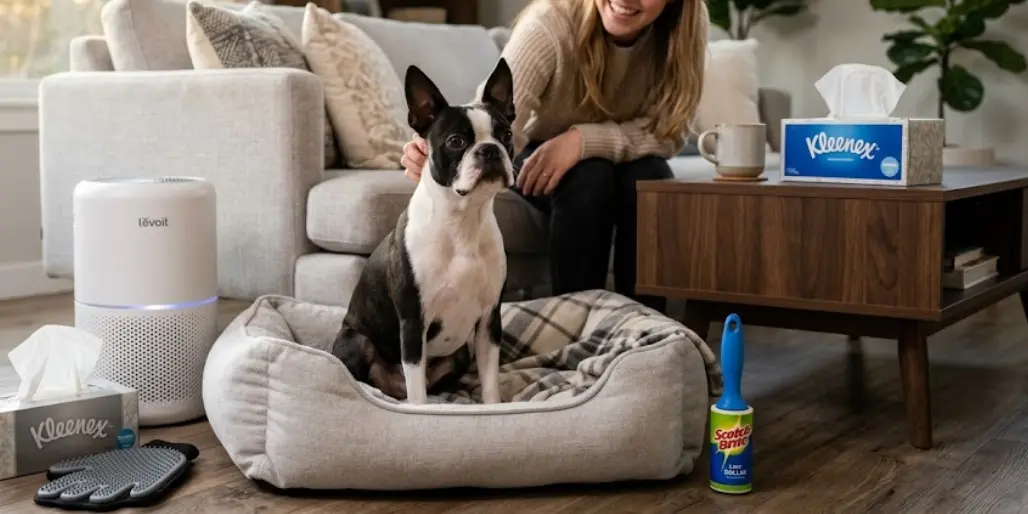
To answer the main question right away, Boston Terriers are not hypoallergenic dogs and can definitely trigger an allergy for sensitive individuals. No dog breed is truly hypoallergenic, and since this pup sheds and produces dander, anyone who tends to suffer from allergies might experience a reaction around these charming little pets.
Understanding Boston Terriers and Allergies
Dealing with dog allergies can be quite frustrating, especially when you fall in love with a popular dog breed like the Boston Terrier. Even though they have a short coat and a smooth coat that does not require endless grooming, these dogs still shed and carry proteins that act as a strong allergen in your home environment.
What Does Hypoallergenic Mean?
When people talk about a hypoallergenic dog, they usually mean a pet that produces fewer allergens than others, but no breed is completely allergy-free. Even Boston Terrier hypoallergenic myths need clearing up because dander, saliva, and urine all contribute to the problem, meaning every Boston Terrier can still affect sensitive owners.
Do Boston Terriers Cause Allergies?
Yes, Boston Terriers are not hypoallergenic and can easily spark severe allergies for vulnerable people. Every Boston Terrier sheds microscopic flakes of skin and hair, which float around and settle on furniture, making it tough for anyone who reacts badly to common household pet triggers.
Common Allergens Associated with Dogs
The primary allergen you need to worry about with any Boston Terrier is the dander trapped in their fur, alongside proteins found in their saliva. While Boston Terrier owners often try to minimize symptoms by frequently asking how to bathe their pets, the underlying proteins remain a challenge for allergy sufferers.
Boston Terriers and Their Coat
Every Boston Terrier features a distinct physical appearance, largely defined by its unique coat type that feels very smooth to the touch. When you welcome this friendly pup into your household, you will quickly notice how manageable their fur is compared to fluffier breeds. However, this appearance does not mean they are safe for everyone, as even a short coat can still trap dander and cause sneezing fits for anyone who tends to suffer from allergies on a regular basis.
Short Coat Benefits
Owning a dog with a short coat brings plenty of daily perks, especially since you will not have to spend hours brushing out knots or dealing with heavy mats. Additionally, they offer several practical everyday benefits:
- A smooth coat naturally collects less outdoor dirt and debris, making cleanup a breeze after a fun walk in the neighborhood.
- Even though your Boston Terrier’s minimal fur length is super convenient for quick wipe-downs, remember that shedding still happens, meaning dander can easily escape into the surrounding indoor air.
Shedding and Allergens
People often assume that less fur means zero problems, but shedding is a natural process for every Boston Terrier, releasing loose hairs and microscopic dander right into your living space. Each stray hair acts as a vehicle for the primary allergen proteins produced by the dog, which easily trigger nasty dog allergies and stubborn skin allergies for sensitive guests. If you constantly suffer from allergies, even this sleek dog breed will require careful management to keep your indoor environment comfortable and breathable.
Grooming Tips for Boston Terrier Owners
Dedicated Boston Terrier owners can significantly reduce floating dander by establishing a simple yet effective grooming routine tailored to their pet. You can easily manage shedding and allergens by following these steps:
- Brushing your dog regularly outside with a soft rubber mitt to capture loose hairs before they land on your sofa or carpet.
- Knowing how often to properly bathe your Boston Terrier without drying out their sensitive skin to wash away trapped allergens.
These practices ensure a much happier and sneeze-free home for everyone in the family.
Managing Allergies with Boston Terriers
Living comfortably with a Boston Terrier when you have sensitivities means you must proactively manage the dander and any lurking allergen circulating in your living spaces. While no hypoallergenic dog truly exists to magically cure severe allergies, implementing strict cleaning routines and using air purifiers can drastically reduce the everyday impact of your beloved pup on your immune system.
Immunotherapy Options
When environmental allergies become too much to handle despite your best cleaning efforts, talking to an allergist about immunotherapy or specialized medications like apoquel can be a game changer. Many dedicated Boston Terrier owners find lasting relief through allergy shots, which gradually help build up your body’s tolerance to the stubborn dander and proteins continuously produced by your favorite short coat companion.
Creating an Allergy-Friendly Home
Designing a truly allergy-friendly home environment involves several key steps to keep your indoor air clean and manage dander:
- Swapping out heavy carpets for hardwood floors
- Washing pet bedding weekly
- Frequently bathing your energetic pup to wash away loose dander
Because Boston Terriers are not hypoallergenic, keeping your indoor air clean with HEPA filters ensures that you can still enjoy cuddling your sweet dog breed without triggering nasty skin allergies.
Choosing the Right Boston Terrier for Allergy Sufferers
If you are determined to bring a Boston Terrier into your household despite dealing with regular dog allergies, spending time with the specific pup beforehand is a wise strategy. Every individual dog can shed differently, and while a smooth coat is easier to manage, sensitive individuals should always test their personal reactions before officially expanding their family.
Conclusion
Final Thoughts on Boston Terriers and Hypoallergenic Qualities
Navigating life with a Boston Terrier when you constantly suffer from allergies requires patience, dedication, and a solid cleaning routine to keep floating dander under control. Remember that any Boston Terrier is not hypoallergenic, so managing expectations and staying proactive with grooming will help you maintain a harmonious and sneeze free home with your furry friend.
Additional Resources for Allergy Management
To master the art of living with a Boston Terrier while keeping terrible allergies at bay, exploring veterinary blogs, allergy forums, and consulting medical professionals provides invaluable guidance. Educating yourself on dander control and proper bathing techniques ensures that you and your precious pup can live together happily without compromising your personal health and comfort.
Explore More About Small Hypoallergenic Dogs
If you decide that a Boston Terrier is simply too much for your sensitive immune system, you might want to read our helpful guide on small hypoallergenic dogs to find a more suitable furry companion. PawandBreeds remains dedicated to helping you navigate every pet ownership challenge with ease and confidence.
FAQ
Q: Are boston terriers hypoallergenic?
A: The short answer is no, boston terriers are hypoallergenic is a myth because no dog is truly 100 percent hypoallergenic. Even though they shed less than many other dogs, they still produce dander, saliva, and skin oils that can trigger allergy reactions in sensitive people.
Q: Why do people think boston terriers are a good dog breed for allergy sufferers?
A: People often recommend this popular american breed because they have short coats and minimal undercoats. Because of this, they drop less fur around the house, which leads many to believe they won’t cause severe allergies compared to fluffy dogs.
Q: Can boston bulls cause allergy symptoms even with short hair?
A: Yes, shedding fur is only part of the problem. Allergy symptoms are usually caused by proteins found in a dog’s saliva and skin oils, as well as dried urine and dander that cling to their coats no matter how short the hair is.
Q: What should I do if someone in the boston terrier family has bad allergies?
A: If you live with boston bulls and suffer from sneezing or itchy eyes, you can try frequent bathing, using HEPA air purifiers, and keeping the dogs out of bedrooms to lessen the symptoms as much as possible.
Q: Are skin issues and food allergies common in boston terriers?
A: Yes, skin problems are quite common in boston terriers, and they often suffer from environmental triggers or food allergies like being allergic to chicken. These skin flare-ups can lead to excessive scratching and hair loss, which spreads more dander into the air.
Q: How can I manage health issues if my boston terrier suffers from severe allergies?
A: If your pup is constantly scratching or getting ear infections, you should talk to your vet about potential treatments. Sometimes veterinarians recommend specialized diets featuring hydrolyzed protein or medications like benadryl to help control the itching.
Q: Is it a good idea to consult a professional before bringing this american gentleman home?
A: Definitely, if you or someone in your household struggles with severe allergies, you should spend time with the american gentleman before adopting. Always ask your vet or an allergist for personalized advice to see if a boston terrier is right for your home.





