
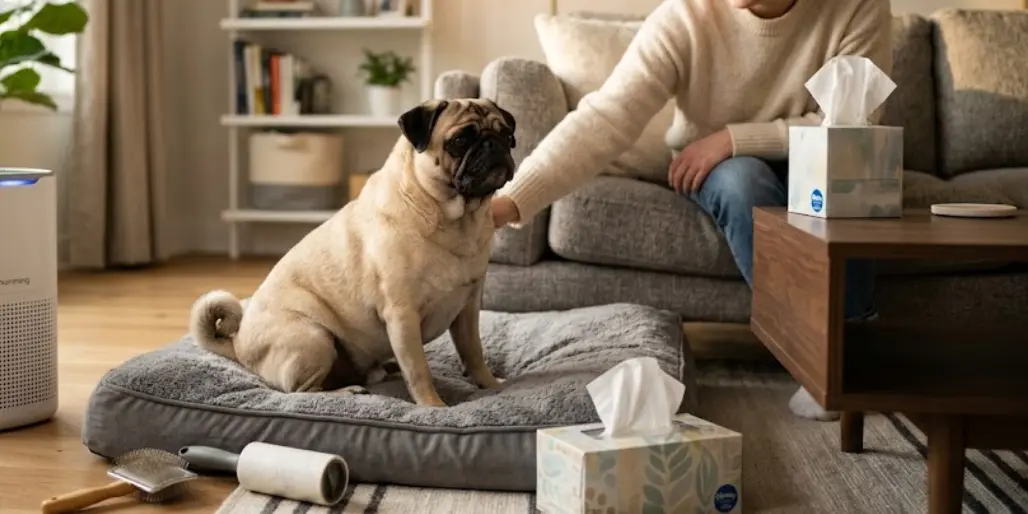
The short answer is no, pugs are not hypoallergenic and they actually tend to trigger symptoms for many people with allergies. If you are wondering are pugs hypoallergenic, you should know that every pug is prone to shedding and spreading dander throughout your home. When looking at this specific dog breed, pug owners frequently deal with shedding fur and trapped debris within the signature skin folds of the animal. As a popular small breed dog option, this companion dog choice still produces the proteins found in saliva, urine, and dander that cause allergic reactions. While some allergy sufferers hope to live with a pug without sneezing, the reality is that dogs produce proteins that stick to fabrics and float into the air easily.
Pugs and Hypoallergenic Properties
Do Pugs Produce Allergens?
Every single pug produces common dog allergens just like other purebred dogs do, meaning they are far from being a hypoallergenic dog breed. If you are allergic to dog dander, your immune system will likely react when you pet your pug or when the dog’s loose hairs float around your living space. People with allergies often experience itchy eyes and a runny nose because the pug is more likely to shed short hairs that trap dried saliva and pollen from outside walks. Even though they are a small dog with a short coat, dogs may still release enough dander to make you sneeze constantly. You might need to bathe your pug frequently and consult veterinary experts to manage the shedding, but these steps will never completely eliminate the microscopic triggers floating around your home.
Understanding Dog Allergies in Pugs
Dealing with dog allergies when you own this brachycephalic companion requires understanding how dander accumulates in tight spaces like facial wrinkles and skin folds. Because a pug is prone to skin issues, keeping your pug clean involves wiping those sensitive areas regularly to reduce the buildup of irritating particles. When you keep your dog well-groomed, you minimize the amount of loose fur that spreads across your furniture and carpets. However, no matter how much you clean, dogs produce airborne triggers that affect allergy sufferers who are sensitive to canine proteins. If you really want to keep your pug while managing your symptoms, you will have to rely on air purifiers and frequent cleaning routines to keep your living environment comfortable and breathable.
Comparing Pugs with Hypoallergenic Dog Breeds
When you compare a pug to a poodle or a Portuguese water dog, you quickly realize why some types of dogs are considered hypoallergenic dog choices while others are not. Unlike hairless varieties or curly-coated pets recognized by the American Kennel Club as low-shedding, the typical pug sheds a moderate amount of hair that carries dander everywhere. This makes the pug more likely to cause reactions than other dogs that do not drop fur continuously throughout the year. If you compare the pug’s coat to hypoallergenic dog breeds, you will see that dogs produce dander in different ways depending on their genetics and coat type. Anyone who wants to avoid an itchy reaction might find it easier to look into other small hypoallergenic dogs instead of hoping a pug will not trigger their immune system.
Living with a Pug as an Allergy Sufferer
Living with a pug when you suffer from allergies can be quite a challenge, especially since every single pug constantly drops loose hair and dander around the house. If you are a pug owner who loves this charming brachycephalic companion, you have to accept that keeping your pug clean is a daily job. People with allergies often find that dog allergies flare up because the animal’s coat and skin folds trap outdoor pollen and saliva. To manage this, you should regularly bathe your pet and consult your veterinary professional for the best skin care advice. While you might still sneeze from time to time, maintaining a strict cleaning routine helps reduce the overall dog allergens floating in your living space. Managing the situation effectively allows you to enjoy your furry friend without letting constant symptoms ruin your daily comfort at home.
Managing Pug Allergies at Home
Controlling your allergic to dog symptoms means taking proactive steps every single day to keep your living environment as clean as possible. Since each dog breed sheds differently, dealing with a pug requires constant vacuuming and wiping down surfaces where dander settles. You can minimize airborne triggers and reduce allergens by incorporating these simple habits into your routine:
- Run high-efficiency particulate air purifiers in every room where your companion spends time.
- Brush your pet outside to prevent loose fur from accumulating on your furniture and carpeting.
- Keep your pet out of your bedroom so you can sleep without waking up with itchy eyes and a stuffy nose.
By staying consistent with these simple household habits, you can significantly reduce the amount of dander and saliva lingering in your home.
Cleaning Tips to Reduce Allergens
Deep cleaning your living space is essential if you want to keep your pug without constantly suffering from severe immune reactions. To dramatically cut down on allergens and maintain a healthy environment, you should follow a few key maintenance steps:
- Wash your pet bedding, blankets, and cushion covers weekly in hot water to eliminate trapped allergens and dried saliva.
- Regularly sweep and mop hard floors, which are much easier to maintain than thick carpets, to cut down on floating pet hair.
- Frequently wipe down those tricky skin folds on your pet’s face, as moisture and debris can build up and worsen overall skin health.
- Use damp cloths on your furniture to capture dust and dander much better than dry dusting tools ever could.
Staying dedicated to these cleaning tasks ensures that your home remains a comfortable haven for both you and your beloved animal companion.
Alternative Dog Breeds for Allergy Sufferers
If you realize that managing a high-shedding companion is simply too difficult for your sensitive immune system, exploring other options might be wise. Many people who love compact companion pets choose small hypoallergenic dogs because these animals produce far fewer reactions and drop minimal hair. Researching different types of dogs helps you find a pet that fits your lifestyle without triggering endless sneezing and watery eyes. Whether you look into poodle mixes or other low-shedding purebred dogs, finding the right match makes life much easier for anyone with sensitivities. Remember to do thorough research on breed info before making a final decision on your next furry family member. Finally, if you need more tips on selecting the right pet, feel free to visit PawandBreeds for expert advice.
Characteristics of Hypoallergenic Dog Breeds
When studying the characteristics of any hypothetical hypoallergenic dog breed, people with allergies often want to know why certain animals trigger reactions while others do not. Every dog breed carries specific proteins in its saliva, urine, and dander, meaning no single animal is completely free of triggering agents. However, some types of dogs shed significantly less hair and release fewer airborne particles into your living space. If you love the unique look of a brachycephalic companion, you might still wonder how dander and shedding impact your daily life. Understanding the science behind these reactions helps you make informed choices before bringing a new pet home. By learning about coat types and grooming needs, you can better prepare your household for managing potential immune responses without feeling overwhelmed by constant cleaning tasks.
What Makes a Dog Hypoallergenic?
A truly hypoallergenic dog is generally defined as a pet that produces fewer allergens and sheds much less fur than the average canine. People often assume that a hairless or curly-coated pet will never cause an allergic reaction, but even those animals still produce proteins in their saliva and skin. The key difference lies in how well the coat traps loose hair and dander instead of releasing them into the air or onto your furniture. When you keep your dog well-groomed and clean, you minimize the spread of irritating particles that make you sneeze and develop itchy eyes. It is vital to consult your veterinary professional if you have severe dog allergies and need guidance on maintaining a safe home environment. Ultimately, no dog is one hundred percent allergen-free, but choosing the right coat type makes a huge difference for sensitive owners.
Popular Hypoallergenic Breeds to Consider
If you are searching for alternative pets that fit your sensitive lifestyle, many popular low-shedding options exist beyond the typical pug owner circle. Poodles and the Portuguese water dog are classic examples of purebred dogs that many allergy sufferers prefer because their coats trap dander effectively. These companion dogs require regular professional grooming to prevent matting, but they reward you by dropping very little hair around your house. Exploring different small breed dogs can also open up wonderful possibilities for finding a furry friend who will not leave you reaching for tissues all day. Always research comprehensive breed info to ensure the animal you choose matches your activity level, living space, and personal allergy tolerance. Taking the time to evaluate your options guarantees a happier life for both you and your future pet.
The Role of Dander, Saliva, and Hair
To truly understand why some animals cause severe symptoms, you must look closely at how dander, saliva, and hair interact within your home environment. Every time your pet grooms itself, dried saliva sticks to the fur and eventually turns into microscopic dust that floats through the air. This airborne dust settles on your carpets, couches, and even inside the deep skin folds of your pet, creating a continuous cycle of irritation. When you bathe your companion regularly, you wash away accumulated pollen and loose dander, providing temporary relief for anyone who suffers from allergies. Even though short-haired pets might seem easier to manage, they often shed tiny hairs that easily penetrate fabric fibers and trigger your immune system. Managing these natural bodily secretions requires consistent cleaning habits, high-efficiency air filters, and a dedicated routine to keep your living space comfortable and breathable.
Conclusion
Final Thoughts on Pugs and Allergies
When wrapping up our discussion on whether this brachycephalic companion can fit into a home with sensitive residents, every pug lover must weigh the reality of pet ownership against their personal health limits. Because a pug is prone to heavy shedding and accumulates significant dander within its skin folds, allergy sufferers often find themselves dealing with constant symptoms like itchy eyes and a persistent sneeze. Even though you can manage the situation by ensuring you regularly bathe your animal and consult a veterinary professional for skin care advice, these lovely pets will never truly match the qualities of a hypoallergenic dog. People with allergies who dream of owning one of these charming companion dogs must accept that living with a pug requires a dedicated cleaning routine, air purifiers, and frequent brushing to minimize the airborne dog allergens floating around the living space.
Exploring Other Small Hypoallergenic Dogs
If you realize that managing a high-shedding purebred dog variety is too difficult for your immune system, exploring other small hypoallergenic dogs can open up wonderful new possibilities for your household. Many allergy sufferers choose alternative dog breed options such as a poodle or a Portuguese water dog because these animals release far fewer proteins from their saliva, dander, and coat. Researching comprehensive breed info helps you find a pet that fits your lifestyle without triggering endless allergic to dog reactions every time you sit on the couch. Whether you look into hairless options or curly-coated small breed dogs, finding the right match makes life much easier for anyone who wants a furry companion. Always evaluate your personal tolerance and consult experts before making a final decision on your next pet.
PawandBreeds: Your Resource for Dog Breeds
Navigating the complex world of pet ownership and understanding how different animals impact your health can feel overwhelming, but you do not have to figure it all out alone. Whether you are still wondering if pug hypoallergenic traits can be managed or if you are searching for alternative low-shedding pets, having access to accurate guidance makes all the difference. For comprehensive breed info, expert advice on managing pet sensitivities, and detailed guides on various companion dogs, feel free to visit PawandBreeds to find everything you need for a happy home.
FAQ
Q: Are pugs considered a good option if you want a hypoallergenic small dog?
A: Not really, because pugs are definitely not hypoallergenic compared to breeds like the portuguese water dog or a poodle. Even though they are a popular lap dog, they actually shed a ton of fur and dander that can easily trigger allergies.
Q: Do black pugs or fawn pugs shed less than other breeds?
A: Sadly, no, because all pugs have a dense double coat that drops fur year-round. You might think hairless dogs or so-called hypoallergenic pets are better, but your average pug counts as a heavy shedder that will leave dog hair all over your furniture.
Q: What actually causes allergies to dogs like pugs?
A: A lot of people think they are allergic to dog hair, but the real culprits are proteins found in dog saliva, urine, and dander. According to the american college of allergy, these proteins float around on shed fur and skin flakes, which is very common in pugs.
Q: Are there any tricks to keep my pug from making my allergies act up?
A: Brushing your pug at least once a week helps catch loose hair before it floats around your home. Keeping your place clean and washing your hands after petting your furry friend can also stop you from reacting to the allergens dogs make.
Q: Can dogs get allergies too, just like humans?
A: Yes, dogs can get allergies just like us, and skin issues are actually reported in pugs quite often. Environmental triggers and food sensitivities can make affected dogs super itchy, even though they are generally a healthy breed overall.
Q: Is it true that pugs may cause worse reactions than other dogs produce?
A: Pugs produce proteins like can f 5 just like other canines, but their heavy shedding makes them more likely to spread those allergens around your house. If your immune system is super sensitive, living with a pug is way more likely to develop into a sneezing nightmare compared to low-shedding breeds.
Q: What are some other health quirks I should know about besides allergies?
A: Pugs are famous for their cute wrinkles and breathing sounds, but they can also suffer from issues where parts of their anatomy slip out of place, meaning sometimes a struggling pug needs help from the vet to stay comfortable.





