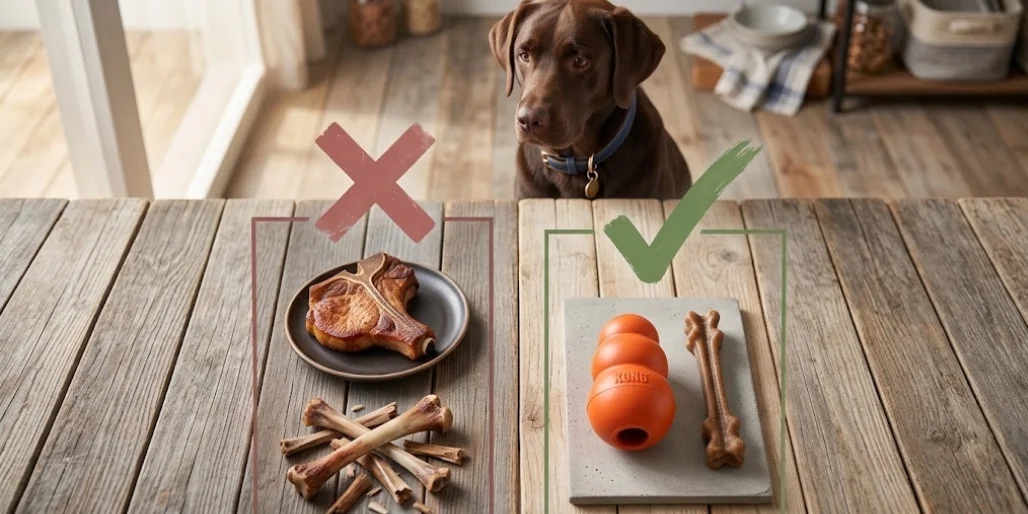
Many dog owners wonder about the safety of feeding their canine companions various human foods, and pork bones are a common point of confusion. The short answer is that dogs should not eat pork bones, especially cooked ones, due to significant health risks.
Understanding What Happens When Dogs Eat Pork Bones
While a dog’s natural instinct might be to gnaw on bones, giving your dog pork bones can lead to serious health complications. It’s crucial for pet parents to understand why these bones are dangerous and what potential dangers they pose to their beloved pets.
The Risks of Dogs Eating Cooked Bones
Cooked bones, including cooked pork bones, are particularly hazardous. The cooking process makes bones brittle, meaning they can break and splinter into sharp fragments when chewed. These bone fragments can cause severe damage to your dog’s digestive tract.
Specific dangers of cooked bones include:
| Type of Bone | Hazards |
| Cooked Bones (General) | Internal injuries, blockages, or even perforation of the intestine. |
| Cooked Pork Bones (e.g., pork chop bones, rib bones) | Splinter easily, presenting a significant choking hazard and a risk for internal damage. |
Avoid giving your dog any cooked bones.
What to Do If Your Dog Eats a Pork Bone
If your dog eats a pork bone, especially a cooked one, it’s essential to act quickly. Do not induce vomiting unless instructed by a vet.
| Action | Details |
| Monitor your dog | Watch for signs of distress like choking, vomiting, lethargy, or changes in bowel movements. |
| Collect bone pieces | Gather any remaining small pieces to show your vet. |
| Contact veterinarian immediately | They will advise on the best course of action based on factors like dog size, amount of bone consumed, and whether it was cooked or raw. |
Signs of Distress After Eating Pork Bones
After your dog eats pork bones, be vigilant for signs of distress. If you notice any of these signs, it’s imperative to check with your vet without delay, as these could be indicators of an internal injury, blockage, or a serious condition like pancreatitis from too much fat, particularly if the pork chop still had much fat attached.
| Potential Hazard | Symptoms |
| Choking | Repeated gagging, drooling, pawing at the mouth |
| Internal Injury, Blockage, or Pancreatitis | Vomiting, diarrhea, constipation, lethargy, loss of appetite, abdominal pain |
Are Pork Bones Safe for Dogs?
Raw Pork: Is It Safe for Dogs to Eat?
While we’ve established that cooked bones are dangerous, the question of raw pork safety for dogs is a bit more nuanced. Raw pork itself, when properly sourced and handled, can be a part of a dog’s diet, but it comes with its own set of risks, primarily harmful bacteria like salmonella or trichinella. Even though raw bones might not splinter in the same way cooked bones do, giving your dog raw pork bones can still pose a choking hazard or cause digestive upset. It’s a good idea to check with your vet before introducing raw pork or any raw bones into your dog’s food regimen.
Why Cooked Bones Are Dangerous for Dogs
Let’s reiterate why cooked bones, especially cooked pork bones, are universally considered bad for dogs. The high heat from cooking strips the moisture from the bone, making it brittle and prone to splintering into sharp, jagged pieces. When a dog eats these brittle bone fragments, they can easily cause lacerations to the mouth, esophagus, stomach, or intestine. These sharp pieces can also lead to blockages in the digestive tract, requiring emergency veterinary intervention. Whether it’s pork chop bones or rib bones, all cooked bones carry this significant risk, making them a definite no-go for your furry friend.
Safe Alternatives to Pork Bones for Dogs
Instead of giving your dog pork bones, which can cause them to choke or develop pancreatitis from too much fat, there are plenty of safe and enjoyable alternatives for chewing. Consider giving your dog durable rubber chew toys, dental chews specifically designed to clean teeth, or appropriate edible chews that are fully digestible. If you’re looking for protein sources, opt for lean pork meat (cooked and unseasoned), or refer to our guide on “Meat & Protein Dogs Can and Can’t Eat” for other safe options. These alternatives provide the satisfaction of chewing without the danger of bones breaking and splintering, keeping your beloved pet safe and happy.
Feeding Pork to Dogs: Best Practices
How to Safely Introduce Pork into Dog Food
If you’re considering introducing pork into your dog’s diet, always prioritize safety. Start with small amounts of lean, cooked pork meat that is unseasoned and boneless. Never give your dog raw pork or pork bones. Ensure the pork is thoroughly cooked to eliminate any harmful bacteria, like trichinella or salmonella, that can be present in undercooked pork. Begin with a very small portion to see how your dog’s digestive tract reacts, as some dogs may have sensitive stomachs. Avoid any pork products with high fat content or seasonings, which can cause pancreatitis.
Portion Control: How Much Pork Can Dogs Eat?
When feeding your dog pork, moderation is key to prevent health issues like pancreatitis from too much fat. Pork should only be an occasional treat, not a primary component of your dog food. A good rule of thumb is that treats, including lean cooked pork meat, should make up no more than 10% of your dog’s daily caloric intake. Always ensure the pork is completely free of any bones, as cooked pork bones splinter easily and pose a significant choking hazard. Check with your vet for specific portion recommendations tailored to your dog’s size and dietary needs.
Consulting Your Vet About Feeding Pork
Before making any significant changes to your dog’s diet, including introducing pork or any other new protein, it’s always best to check with your vet. Your veterinarian can offer personalized advice based on your dog’s individual health, age, and any existing medical conditions. They can also provide guidance on the safest preparation methods for pork meat and help you understand the risks associated with feeding your dog bones or fatty pork products. This consultation ensures you’re making informed decisions that prioritize your beloved pet’s well-being and avoid any potential harm.
Conclusion
Final Thoughts on Feeding Dogs Pork Bones
In summary, the consensus is clear: dogs should not eat pork bones, whether cooked or raw. Cooked bones are dangerous because they splinter easily, creating sharp bone fragments that can cause serious internal injuries, blockages, or choking hazards in your dog’s digestive tract. While raw pork bones might not splinter in the same way, they still pose choking risks and can carry harmful bacteria. Always opt for safe alternatives like vet-approved chew toys or digestible treats to satisfy your dog’s chewing instincts, keeping your dog safe from the significant dangers of pork bones.
Reference to Meat & Protein Dogs Can and Can’t Eat
For more comprehensive information on safe and unsafe protein sources for your canine companion, we encourage you to explore our detailed guide on what meats and proteins dogs can and can’t eat. This resource offers valuable insights into various dietary options, helping you make informed decisions about your dog food. It covers everything from safe lean meats to avoid, ensuring your beloved pet receives the best nutrition without encountering any of the dangers associated with inappropriate food choices or bones.
Pawandbreeds: Your Trusted Source for Pet Care
At Pawandbreeds, we are dedicated to providing pet parents with reliable and up-to-date information to ensure the health and happiness of their furry friends. From dietary advice to behavioral tips, our resources are designed to help you navigate the complexities of pet ownership with confidence. Trust us to be your go-to source for expert guidance and practical solutions, empowering you to provide the best possible care for your beloved pets.
FAQ
Q: Is it really that bad for dogs to eat pork bones?
A: Yeah, it’s generally not a good idea. While dogs love to chew, and pork bones might seem like a natural treat, they’re actually quite risky. Cooked pork bones are fragile and can break and splinter into sharp pieces. This can cause a lot of problems for your pup, like choking, internal injuries, or blockages.
Q: What happens if your dog eats cooked pork bones?
A: If your dog eats cooked pork bones, it’s not good news. Those bones can break and splinter easily, and those sharp fragments can get stuck in your dog’s mouth and gums, or worse, cause internal damage. They can lead to choking, cuts in their digestive tract, or even a complete blockage that requires emergency surgery. It’s definitely not something you want for your furry friend.
Q: Why can’t dogs eat cooked pork bones, but some people say raw bones are safe?
A: That’s a great question! The main issue with cooked pork bones is that the cooking process makes them brittle. They become much more likely to break and splinter into dangerous shards, which are unsafe for dogs. Raw bones, on the other hand, are more pliable and are considered safe for dogs to chew on. However, even with raw bones, there’s a risk of bacterial contamination from raw meat, so always check with your vet before giving them to your dog. It’s best to avoid feeding any kind of pork bones without veterinary guidance.
Q: My dog just ate a pork bone, what should I do?
A: If your dog just ate a pork bone, especially a cooked one, it’s important to act quickly. Watch your dog closely for any signs of distress like choking, vomiting, lethargy, or difficulty pooping. These could all be signs that the bones can cause internal damage or a blockage. It’s always best to call your vet right away and explain what happened. They can give you specific advice and tell you if your dog needs to come in for an examination.
Q: Are there any pork products that are safe for dogs to eat?
A: Yes, dogs can eat certain pork products in moderation! Cooked, plain pork without any seasoning, sauces, or excessive fat is generally considered safe. Think lean cuts of pork shoulder or pork loin. You can also offer your dog small pieces of pork jerky, as long as it’s specifically made for dogs and doesn’t contain harmful ingredients. Just remember that like bacon, highly processed or fatty pork is not easy to digest and can lead to an upset stomach or pancreatitis.
Q: Can I give my dog any type of bones to chew on?
A: While dogs love to chew, and chewing bones is a natural instinct, you need to be really careful about what you give your dog. While raw bones can be safe, avoid any cooked bones, including chicken bones, as they can break and splinter. Instead of cooked pork bones, you can offer them dog-specific chew toys made of rubber or nylon. These are designed to be safe and durable for chewing bones, and they won’t splinter or cause the same risks as real bones. Always supervise your dog when they’re chewing anything to prevent choking.
Q: My dog loves chewing bones. What are some safe alternatives to pork bones?
A: Instead of giving your dog pork femur bones or any other risky bones, there are plenty of safe and satisfying alternatives. Look for high-quality, durable chew toys specifically designed for strong chewers. You can also offer dental chews that help clean their dog’s teeth and promote good oral hygiene. Some vets even recommend certain types of raw recreational bones (never cooked!) but it’s crucial to discuss this with your vet first to ensure they are appropriate for your dog’s size and chewing habits. It’s a much better way to give your dog a treat for your dog without the risks of bones can break and splinter.