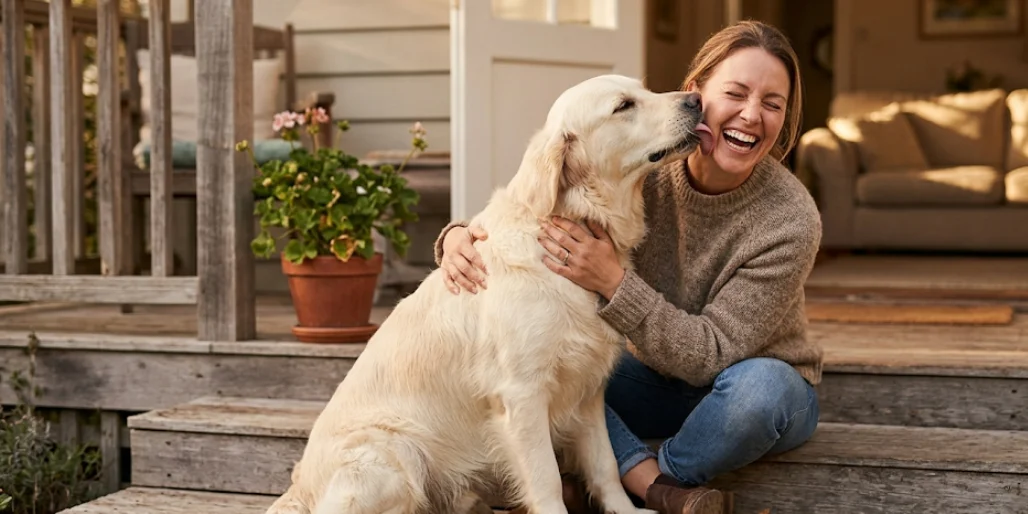
Dogs lick your face mainly for three reasons: affection (an instinct from licking their mother as puppies), greeting you after time apart, and occasionally self-soothing when stressed. A loose, wiggly body during licking usually means comfort; a stiff body or a quick lick-and-retreat can mean they want space instead. Below, we cover all 7 reasons and when frequent licking is worth a vet visit.
Reasons for Dog Licking
Affection and Bonding
One of the most common reasons your dog may lick your face is as a clear sign of affection and bonding. When your dog licks your face, they are often showing you how much they love you and strengthening the bond you share. This type of licking is a way of saying, “You’re part of my pack, and I care about you deeply!” It’s a natural behavior for dogs, stemming from their puppy days when they would lick their mother’s face to solicit food or attention. Dogs are social creatures, and face licking helps reinforce their connection with their human companions. Pawandbreeds understands this bond, offering guides like our comprehensive dog behavior guide to help you better understand your pet’s emotional state.
Greeting Rituals
Dog licking your face can also be a part of their greeting rituals. When you come home, your dog may lick your face and hands as a way to acknowledge your return and express their excitement. This greeting behavior is a deep-seated instinct; puppies often lick their mother’s face to greet her and signal their presence. It’s a social cue that helps dogs communicate within their pack, and they extend this natural behavior to their human family. This type of licking is usually accompanied by other happy body language signs, like a wagging tail or playful jumps, clearly indicating their joy at seeing you.
Grooming Behavior
While it might not seem like it, your dog may also lick your face as a form of grooming behavior. In the wild, dogs lick each other to clean wounds, remove dirt, and reinforce social bonds. When your dog licks your face, they might be attempting to “clean” you, similar to how a mother dog grooms her puppies. This isn’t necessarily about hygiene but rather a display of care and an instinctual desire to look after their pack members. It’s a sign that your dog sees you as part of their family and wants to take care of you, much like they would another dog.
Understanding Your Dog’s Behavior
Instinctual Drives
Your dog’s face licking often stems from deep-seated instinctual drives. When your dog licks your face, it’s a behavior rooted in their ancestral past, where puppies would lick their mother’s face to solicit food or gain attention. This innate drive is a powerful motivator for many dog behaviors, including affection and greeting rituals. This type of licking helps dogs communicate their needs and establish social connections, reflecting their pack animal heritage. Understanding these instinctual patterns is key to interpreting your dog’s actions and strengthening your bond.
Communication and Social Signals
Beyond instinct, dog licking your face is a significant form of communication and social signaling. Your dog may lick your face to express a variety of messages, from showing affection to seeking reassurance. This behavior is often accompanied by other body language cues, like a wagging tail or soft eyes, which further clarify their emotional state. Dogs are social creatures, and face licking helps them reinforce their connection with their human companions, serving as a way of saying, “I acknowledge you, you and I feel close to you.” It’s a key part of how dogs communicate within their family unit.
Stress Relief and Comfort
Sometimes, a dog licking your face can be a way for them to relieve stress or find comfort. Just as humans might engage in repetitive behaviors when anxious, some dogs may lick as a self-soothing mechanism. If your dog exhibits excessive licking, it could be a sign they are feeling overwhelmed or stressed, and the action helps them to relax. This type of licking can also be a way for your dog to seek comfort from you, leaning into your presence for reassurance. Observing other signs of stress in your dog’s behavior can help you address their underlying emotional state.
When to Be Concerned
Excessive Licking
While a little dog licking is usually harmless and a sign of affection, excessive licking can sometimes be a cause for concern. If your dog starts to lick your face, hands, or even objects around the house much more frequently or intensely than usual, it might indicate an underlying issue, see PetMD’s breakdown of licking causes for when it’s worth a vet visit. This type of licking can be a sign of anxiety, boredom, or even an obsessive-compulsive disorder. It’s important to observe your dog’s behavior closely to identify if there are any other changes that accompany this increased licking, which might point to their emotional state.
Health Issues to Consider
Sometimes, what seems like harmless dog licking can actually be a symptom of a health issue. For instance, if your dog licks your face and hands excessively, or even licks themselves constantly, they might be experiencing discomfort from allergies, skin irritations, or even internal pain. A dog may lick to soothe themselves when they are not feeling well. If you notice a sudden increase in the frequency or intensity of your dog’s licking, especially if accompanied by other symptoms, it’s always best to consult with your vet to rule out any potential medical problems.
Behavior Modification Techniques
If you want to stop the licking, or at least reduce it, there are several behavior modification techniques you can try. When your dog starts to lick your face, you can gently move away or redirect their attention with a toy or a command. Consistently ignoring the licking and rewarding calm behavior can help teach your dog to stop licking. Positive reinforcement is key here; never punish your dog for licking, as this can damage your bond. A professional behaviorist can provide further guidance on dog training and help address any persistent or excessive licking.
Conclusion
Summary of Key Points
To summarize, your dog licks your face for a variety of reasons, most commonly as a sign of affection, a greeting ritual, or even as a form of grooming. Understanding these instinctual drives and social signals helps us interpret why our dogs lick us. While occasional face licking is normal, excessive licking can sometimes indicate underlying stress, anxiety, or even health issues, warranting closer observation or a vet visit. Learning to read your dog’s body language and emotional state is crucial for a harmonious relationship.
Further Reading: Dog Behavior Guide
For those interested in delving deeper into understanding their furry companion’s actions, we recommend exploring our comprehensive dog behavior guide. This guide offers valuable insights into various aspects of your dog’s behavior, from communication cues to common training challenges. It’s an excellent resource for any pet parent looking to strengthen their bond with their dog and address any concerns about their dog’s behavior. Our dog behavior guide can help you interpret your dog’s signals and respond effectively.
Pawandbreeds Insights
At Pawandbreeds, we believe that a well-understood dog is a happy dog. Our goal is to provide pet parents with the knowledge and tools to better understand their companions. From identifying the reasons your dog may lick your face to offering solutions for excessive licking, we’re here to help you navigate the wonderful world of dog ownership. Remember, every lick, bark, and wag tells a story, and with a little insight, you can understand your dog’s emotional state better.
FAQ’s
Q: Why does my dog lick my face so much?
A: Honestly, there are a bunch of different reasons your pup might be obsessed with your face. It could be a sign of love, a way to get your attention, or just because your skin has some savoury food residue left over from lunch. Dogs are weird little creatures like that, and face-licking is basically their version of a hug, a hello, and a snack all rolled into one.
Q: Is it normal for a dog to lick your face right when you wake up?
A: Yep, super normal! Your morning breath is basically a buffet of interesting smells to your dog, and their sense of smell is way stronger than ours. So when you wake up, your dog licks your face partly because they’re excited to see you and partly because your breath is just fascinating to them (even if it grosses you out).
Q: What does it mean when my dog licks your face like nonstop?
A: If your dog just can’t stop, it might be an appeasement thing (they’re trying to calm themselves or you down), or it could just be an instinctive behavior left over from puppyhood when licking mom meant getting fed. Some dogs also lick to self-soothe, kind of like how people bite their nails when they’re anxious.
Q: Why do dogs lick your face when you’re upset or crying?
A: This is one of the sweetest reasons on the list. Dogs are incredibly perceptive, and licking your face may be their way of comforting you. It’s basically their way of saying “hey, I’m here for you” without words. Super affectionate move on their part.
Q: Should I let my dog lick my face, considering what’s in a dog’s mouth?
A: This is where opinions get split. A dog’s mouth carries all sorts of bacteria, and their saliva isn’t exactly sterile. Most healthy adults are fine with the occasional face lick, but if you’ve got a compromised immune system or open cuts, it’s probably smart to turn your cheek (literally) sometimes.
Q: My dog licks your face so forcefully it’s almost annoying. Is that a problem?
A: Not necessarily a problem, but it might mean your dog is over-excited or seeking a big reaction from you. If the licking gets to be too much, you don’t have to just sit there and take it. Feel free to get up and leave or redirect them to a toy instead. Consistency will teach them to tone it down.
Q: Why do some dogs lick faces while others barely lick at all?
A: Every dog has their own personality, just like people. Some pups are natural lickers who show affection through their tongue, while others express love in totally different ways, like leaning on you or following you around. It’s not that one dog loves you more, they just have different reasons and different love languages.
Q: Does licking release some kind of “happy chemical” for dogs?
A: Yup, actually! Licking can trigger an endorphin release in dogs, which makes them feel calm and happy. That’s part of why licking can become compulsive for some dogs, it literally feels good to them, similar to how we might stress-eat chocolate.
Q: How do I get my dog to stop licking my face if I don’t like it?
A: Totally fair if you’re not a fan! The easiest way is to just get up and walk away the second they start licking. Don’t yell or growl at them (well, obviously don’t literally growl, but you know what I mean), just remove your attention. Dogs learn fast when the fun stops the moment they lick, and eventually they’ll get the memo.
Q: Is it true that licking can become an obsessive habit for dogs?
A: It can, yeah. If a dog licks excessively, it might have crossed over into compulsive territory, which sometimes needs a vet or behaviorist’s input. If your dog’s licking habit seems to escalate rather than calm down over time, it’s worth chatting with your vet just to rule out anxiety or other underlying issues.