Fear aggression in dogs is a complex and challenging behavioral issue that many dog owners face. This article delves into what fear aggression truly means and how it manifests in everyday situations. Crucially, it also explores how to approach training an aggressive dog — with a focus on understanding their underlying fears and the nuances of canine behavior.
- Understanding their underlying fears
- Exploring the nuances of canine behavior to help you better support your fearful dog
The first step toward helping a fearful dog is understanding that their aggression is not defiance — it is distress. With the right approach, real and lasting progress is possible.
For a broader foundation in managing dog behavior and building training skills from the ground up, the complete dog training guide covers everything an owner needs alongside the specific strategies in this article.
What is Fear Aggression in Dogs?
Definition of Fear Aggression
Fear aggression is a defensive type of aggression that a dog displays when it feels threatened or perceives a threat. It is rooted in a dog’s fear and arises when the canine believes that the only way to escape a perceived danger is to react aggressively. A fearful dog exhibiting this behavior is not being malicious; rather, it is desperately trying to protect itself from something that causes it significant stress or anxiety. Understanding this fundamental aspect is crucial for any dog owner dealing with an aggressive dog, as it shifts the focus from punishment to empathetic intervention.
Understanding Aggression in Dogs
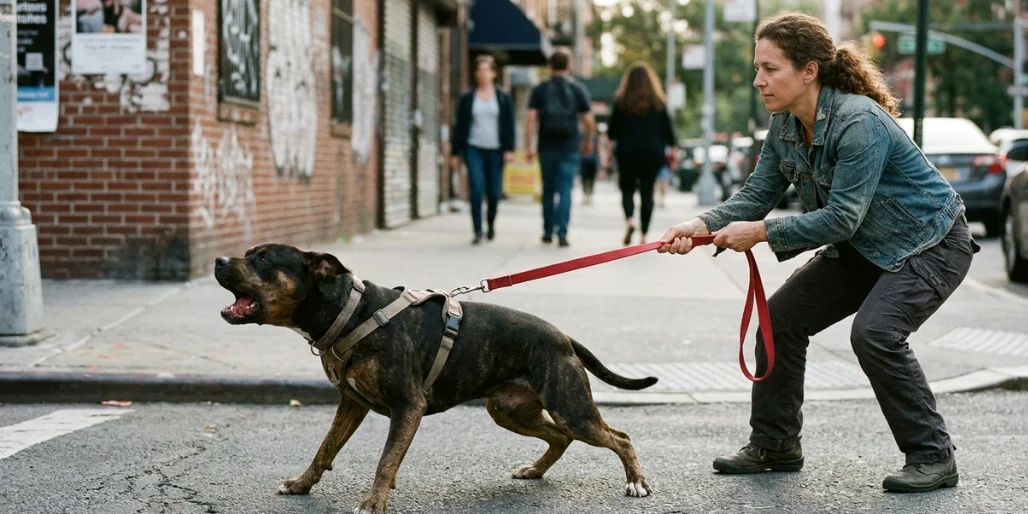
Aggression in dogs is a broad term encompassing a range of behaviors, from a subtle growl to a full-blown bite. It can be triggered by various factors, but in the case of fear aggression in dogs, the primary driver is the dog’s fear. When a dog feels anxious or threatened, it may initially display subtle signs of fear. If these early warnings are ignored or the dog feels further cornered, the aggressive behavior will escalate, potentially leading to:
- Snapping
- Lunging
- Biting
This aggressive behavior is a desperate attempt by the dog to create distance from the perceived threat.
According to the AKC Canine Health Foundation’s research on canine aggression, fear is recognised as the single most common cause of canine aggression — far more prevalent than dominance-based aggression — and applying punishment-based training methods to a fearful dog can actually make the aggression significantly worse over time
Differences Between Fear-Based Aggression and Other Types
It is vital for dog owners to differentiate between fear-based aggression and other types of aggression, such as territorial aggression or resource guarding. While all forms of aggression require careful dog training, fear-based aggression stems specifically from the dog’s fear and a perceived lack of escape. A fear-aggressive dog often displays body language indicating anxiety, such as a tucked tail, flattened ears, or trembling, before or during an aggressive outburst. In contrast, a dog exhibiting territorial aggression might appear confident and bold. Recognizing these distinctions is essential for a professional dog trainer to formulate an effective intervention plan, often involving counter-conditioning and positive reinforcement to help the anxious dog.
Signs of Fear Aggression
Identifying Signs of Fear in Dogs
Recognizing the early signs of fear in dogs is paramount for any dog owner dealing with a fearful dog. A dog’s body language can communicate a great deal about its emotional state. Subtle indicators often precede more overt signs of fear aggression. These include:
- Lip licking
- Yawning
- Excessive panting
- A tucked tail
A fearful dog may also avert its gaze, flatten its ears, or tremble. These are crucial signals that the dog feels anxious and potentially threatened, indicating a need for careful intervention and understanding to prevent escalation into aggressive behavior.
Recognizing Signs of Fear Aggression
When a dog’s fear escalates, it may begin to display direct signs of fear aggression. This type of aggression is often characterized by a dog feeling trapped or cornered, leading it to react defensively. A fear-aggressive dog might growl, snap, lunge, or even bite if it perceives a threat and feels it has no escape. Unlike other forms of aggression, fear aggression in dogs is typically accompanied by a defensive posture, such as a low crouch, a tucked tail, and dilated pupils, all indicating the dog’s underlying fear.
Behavioral Indicators of an Anxious Dog
An anxious dog often exhibits a range of behavioral indicators that signal its distress and potential for fear-based aggression. Beyond the physical signs, an anxious dog may become withdrawn, hide, or show avoidance behaviors towards certain people, objects, or situations that trigger fear. They might also engage in displacement behaviors like excessive grooming or pacing. A professional dog trainer will recognize these indicators as crucial clues to the dog’s fear and aggression, guiding the approach to socialization, counter-conditioning, and positive reinforcement to help your anxious dog.
Triggers of Fear-Based Aggression
Common Triggers for Fear Aggressive Dogs
Understanding the common situations that trigger fear aggression in dogs is crucial for effective dog training and management. Many fear aggressive dogs react strongly to perceived threats such as unfamiliar people, other dogs, or novel environments. A sudden movement, a loud noise, or even direct eye contact can cause fear and aggression in a fearful dog. For some canines, being approached by another dog or a child may feel particularly threatening, leading to a defensive growl or snap. Identifying these specific triggers is the first step towards helping a dog with fear.
Environmental Factors Contributing to Aggression
Environmental factors play a significant role in fostering fear-based aggression in dogs. A lack of early socialization can leave a dog feeling overwhelmed and fearful in new situations. Confined spaces, a chaotic home environment, or sudden changes in routine can all increase a dog’s anxiety and make them more prone to aggressive behavior. Additionally, experiences where a dog feels trapped or unable to escape a perceived threat can reinforce their fear and aggression, making them more reactive in similar future scenarios. A professional dog trainer often considers these factors when devising a training plan for an anxious dog.
Understanding the Role of Past Experiences
A dog’s past experiences are powerful shapers of their current behavior, particularly concerning fear aggression. A fearful dog who has previously endured neglect, abuse, or traumatic encounters is highly likely to develop fear-based aggression. Such negative experiences can create deep-seated fear and a reactive response to anything that reminds them of past trauma. A professional dog trainer will often delve into a dog’s history to understand these foundational experiences, as this insight is critical for implementing effective counter-conditioning and positive reinforcement techniques to alleviate the dog’s fear and aggression.
Training the Fearful and Aggressive Dog
The Training Process for Aggressive Dogs
The training process for an aggressive dog, particularly one exhibiting fear aggression, demands patience, consistency, and a nuanced understanding of canine behavior. A professional dog trainer will typically begin by assessing the dog’s specific triggers and the intensity of its fear-based aggression. The goal is not to punish the aggressive behavior, which can exacerbate the dog’s fear, but rather to modify the underlying emotional response that causes the dog to react aggressively. This often involves creating a structured environment where the fearful dog feels safe and gradually introducing challenges designed to build confidence and reduce its fear and aggression.
Counter-Conditioning Techniques
Counter-conditioning is a cornerstone technique for addressing fear aggression in dogs, aiming to change the dog’s emotional response to a trigger from negative (fear, aggression) to positive. This involves repeatedly pairing the fear-inducing stimulus with something the dog loves, such as high-value treats or praise, at a sub-threshold level where the dog does not react with aggression. Over time, the fearful dog learns to associate the previously scary trigger with positive experiences, thereby reducing its fear-based aggression. This systematic approach, guided by a skilled dog trainer, helps the anxious dog feel more comfortable and less reactive in triggering situations.
Positive Reinforcement Strategies
Positive reinforcement is an indispensable strategy when training a fearful dog displaying aggression. Instead of punishing unwanted aggressive behavior, which can intensify the dog’s fear, positive reinforcement focuses on rewarding calm, non-reactive responses to triggers. When the fearful dog shows signs of relaxation or simply acknowledges a trigger without a growl or lunge, it is immediately rewarded. This builds a positive association and encourages the dog to choose desirable behaviors, helping to mitigate fear and aggression. A professional dog trainer will emphasize this approach to build trust and confidence in the aggressive dog, ultimately helping your anxious dog.
Helping Your Anxious Dog
Creating a Safe Space for Your Dog
Creating a safe space is paramount for helping an anxious dog, especially one prone to fear aggression. This dedicated area, such as a crate or a quiet room, should be a sanctuary where the fearful dog can retreat when feeling overwhelmed or triggered. It should be comfortable, free from stressors, and associated only with positive experiences. By having a predictable and secure refuge, the dog can learn to self-regulate its anxiety, reducing the likelihood of fear-based aggression and fostering a sense of security. This foundational step is crucial in any comprehensive dog training plan for an aggressive dog.
Implementing a Consistent Routine
Implementing a consistent routine is incredibly beneficial for an anxious dog, as predictability can significantly reduce overall stress and the potential for fear aggression. A stable schedule for feeding, walks, playtime, and rest helps the fearful dog feel secure and understand what to expect, thereby minimizing surprises that can trigger fear and aggression. This consistency provides a sense of control for the dog, making them less likely to react defensively to perceived threats. A well-structured routine is a simple yet powerful tool for any dog owner dealing with an anxious or aggressive dog.
Seeking Professional Help
For persistent or severe cases of fear aggression in dogs, seeking professional help from a qualified dog trainer or veterinary behaviorist is essential. A professional dog trainer possesses the expertise to accurately assess the root cause of the dog’s fear and aggression, identify specific triggers, and develop a tailored, humane dog training plan. They can guide dog owners through complex counter-conditioning and positive reinforcement techniques, ensuring the safety of both the dog and others. Early intervention from a professional can make a significant difference in helping a dog with fear, preventing escalation of aggressive behavior and improving the quality of life for all involved.