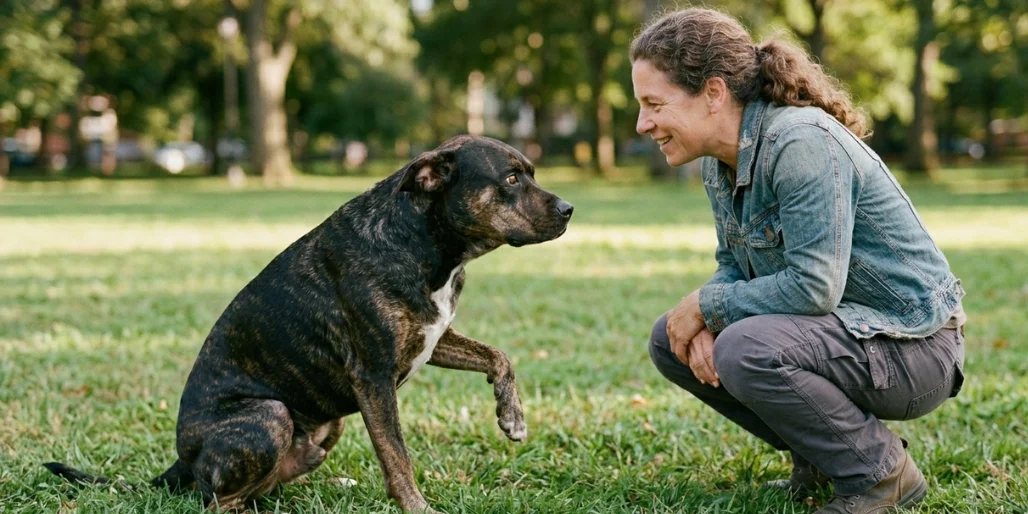
Understanding the nuances of canine communication is paramount for fostering a harmonious relationship between dogs and their human companions. The canine ladder of aggression offers an invaluable framework for dog owners, helping them recognise and interpret the subtle — and often overlooked — signals a dog may exhibit before resorting to aggressive behavior.
Dogs are communicating constantly. The problem is that most owners only notice the top of the ladder — the growl, the snap, the bite — and miss everything the dog said long before it got there.
By building a solid foundation in dog training alongside an understanding of the ladder of aggression, owners are equipped to prevent problems before they escalate rather than simply react to them after the fact.
What is the Canine Ladder of Aggression?
Definition of the Ladder of Aggression
The ladder of aggression — also known as the canine ladder of communication — is a conceptual model illustrating the escalating steps of a dog’s behavior when experiencing discomfort or perceiving a threat. First devised by veterinary surgeon and animal behaviourist Dr. Kendal Shepherd and published in the BSAVA Manual of Canine and Feline Behavioural Medicine, the model has become one of the most widely used tools in professional dog training and veterinary practice worldwide. As the PDSA explains in their dedicated canine ladder of communication guide, the sooner an owner can pick up on the earlier rungs of the ladder, the sooner they can stop whatever the dog is finding stressful — preventing the dog from needing to move any higher.
The progression of these behaviors can be summarized as follows:
| Ladder Level | Behavior Examples |
| Bottom (Early Signs) | Yawn, lip licking, looking away |
| Higher (Escalated Warning) | Growl, snap, bite |
Importance of Understanding Canine Behavior
It is incredibly important for dog owners to understand canine behavior, especially the early signs of a dog feeling uncomfortable, as this knowledge is crucial to prevent aggression. Many common human reactions, such as approaching a dog that is stiffening or showing the whites of their eyes, can inadvertently escalate their behavior. By learning to recognize these initial communication signals, such as a dog turning their head away, moving away, or even a subtle blink, we can help our dogs by addressing their discomfort before it progresses. A lack of understanding can lead us to misinterpret our dog’s body language, missing critical warning signs that could prevent much more serious dog aggression.
How the Canine Ladder Relates to Aggressive Behavior
The canine ladder of aggression offers a structured understanding of how a dog’s discomfort can escalate into aggression if not acknowledged and addressed. Dogs communicate their discomfort through various signals, starting with subtle cues and potentially escalating to more overt displays if early signs are ignored.
| Level of Discomfort | Examples of Signals |
| Low | Lip lick, yawn |
| Moderate | Paw raise, walking away, body stiffening |
| High | Growl, snap |
Recognizing these steps allows dog owners and behaviorists to intervene effectively and prevent aggression before a bite becomes a real possibility.
What are the Signs of Aggression in Dogs?
Body Language Indicators of Aggression
Recognizing the subtle shifts in a dog’s body language is fundamental to understanding the early signs of aggression. A dog may communicate their discomfort through various postures and expressions, starting at the bottom of the ladder of aggression. If these early signals are ignored, the dog may escalate their behavior.
| Early Signs of Discomfort | Escalated Behavior |
| Subtle lip lick | Stiffening their body |
| Yawn (when not tired) | Raising a paw |
| Turning head away | Showing the whites of their eyes |
| Looking away completely |
These are all communication signals indicating that the dog is feeling uncomfortable and, if ignored, could lead to further escalation on the canine ladder.
Common Behaviors to Recognize Aggression
Beyond the more subtle body language, there are common behaviors that clearly indicate a dog’s discomfort and potential for aggressive behavior. These warning signs are higher on the ladder of aggression. A dog may move away or actively walk away from a situation that makes them uncomfortable. If forced to stay, they might offer a growl, which is a clear sign that they wish for the perceived threat to desist. A snap, which is a bite that doesn’t make contact or is inhibited, is an even more serious communication signal, showing that the dog is nearing the top of the ladder and a full bite is a real possibility. Understanding these behaviors is vital for dog owners to prevent aggression in dogs.
Understanding the Canine Ladder of Communication
The canine ladder of communication is an invaluable tool for dog owners and behaviorists to understand and prevent dog aggression. It illustrates the series of steps a dog will take, starting with appeasement signals like a blink or a yawn, and escalating through more overt warning signs such as a stiff posture or a paw raise. Misinterpreting these early signs or ignoring a dog’s body language can lead to escalation, with the dog ultimately resorting to a growl, a snap, or even a bite at the top of the ladder. By learning to recognize these communication signals, we can help our dogs by addressing their discomfort early and effectively, fostering better canine communication and preventing aggressive behavior.
How Can We Help Our Dogs Manage Aggression?
Training Techniques to Mitigate Aggressive Behavior
Implementing effective training techniques is crucial for mitigating aggressive behavior in dogs. By understanding the canine ladder of aggression, dog owners can recognize the early signs of discomfort and intervene before escalation. Positive reinforcement methods, focusing on rewarding desired behaviors, can help to build a dog’s confidence and reduce the likelihood of them feeling uncomfortable. When a dog exhibits signs like a lip lick or a yawn, redirecting their attention or removing them from the perceived threat can prevent the behavior from progressing to a growl, a snap, or even a bite. Consistent training helps our dogs understand appropriate responses and fosters better canine communication.
The Role of Socialization in Reducing Aggression
Proper socialization plays a pivotal role in reducing aggression in dogs, particularly when considering the canine ladder of aggression. Exposing puppies to various positive experiences with different people, environments, and other canines helps them develop resilience and confidence, making them less likely to feel uncomfortable in new situations. This early exposure can prevent them from needing to escalate their behavior up the ladder. A well-socialized dog is better equipped to handle novel stimuli without resorting to warning signs like a stiff posture or a growl, thereby avoiding potential aggressive behavior. Recognizing a dog’s body language during socialization can help dog owners ensure positive interactions.
Seeking Professional Help for Aggressive Dogs
When a dog consistently exhibits aggressive behavior, especially if they are frequently at the top of the ladder of aggression, seeking professional help from a certified dog behaviorist or trainer is essential. These experts can accurately interpret a dog’s body language, identify the triggers for their aggression, and develop a tailored plan to help our dogs. They can guide dog owners in understanding the subtle communication signals a dog may display, from a blink or a lip lick to a growl or a snap, providing strategies to prevent escalation. Professional intervention is critical for managing dog aggression and ensuring the safety and well-being of both the dog and those around them.